
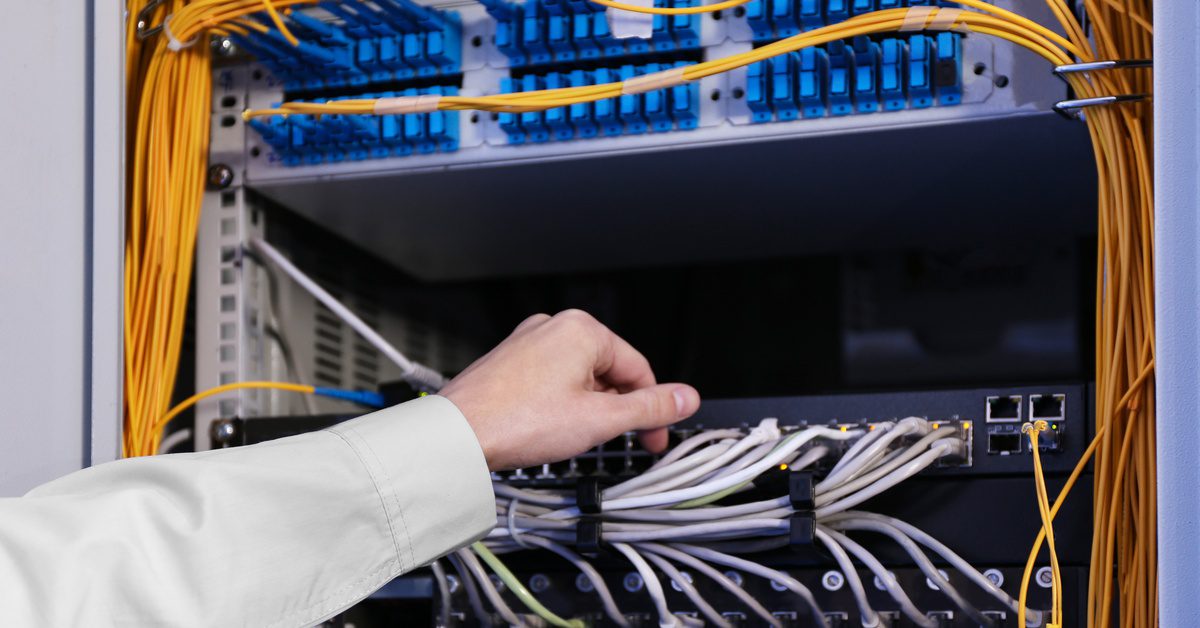
Implementing effective cable management is crucial for the performance and longevity of any data center. Without a structured approach, tangled cables can obstruct airflow, increase maintenance time, and create safety hazards. Properly implementing horizontal and vertical cable management will keep your server racks organized, improve cooling efficiency, and simplify troubleshooting. An organized system will make sure your infrastructure is reliable and scalable.
What Is Horizontal Cable Management?
Horizontal cable management organizes patch cables between equipment in a server rack. It typically involves using management panels installed directly above or below network switches. These panels feature rings or finger ducts that guide cables neatly from a patch panel to a switch port. This method prevents cable strain, maintains proper bend radius, and ensures a clean, professional appearance. An organized horizontal setup is the foundation of an efficient rack layout.
What Is Vertical Cable Management?
Vertical cable management routes cables between different pieces of equipment within a rack or between adjacent racks. Vertical managers are installed along the sides of a server rack, providing a clear channel for large bundles of cables. They are essential for managing the high density of cables in a modern data center. Effective vertical management prevents airflow blockages and makes it easier to trace and replace individual cables without disrupting the system.
How Do They Work Together?
Horizontal and vertical managers work together to create a comprehensive cable routing system. Cables run from equipment into a horizontal manager, then travel down a vertical channel to connect to other devices. This synergy supports cables and organizes them throughout their path. Consider using products such as the Titan cable management rack for your layout, as it integrates both solutions seamlessly.
Best Practices for Implementation
A successful cable management strategy requires careful planning and execution. Follow these best practices to ensure your data center remains efficient and easy to maintain.
- Use horizontal and vertical managers to create a complete system.
- Label all cables at both ends to simplify identification.
- Secure cables with hook-and-loop ties instead of zip ties to avoid overtightening.
- Leave some slack in your cables to prevent strain on connectors.
These tips for implementing horizontal and vertical cable management can help you create a safe, efficient, and scalable data center environment. Contact AMCO Enclosures today to find the ideal enclosure and cable management solutions for your data center or co-location facility.